
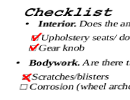
You can use the PreOwnedCarAdvice Checklist during the purchase of a used car. Follow the checklist to use all the knowledge of our handbook in practice.
 Have you found a car that ticks all the boxes, then you should try to get a discount on the asking price. Because there is always a margin of profit, between the asking price and the dealers purchase price, it is up to you to negotiate the best possible deal.
Shopping for a used car, the terms Non VAT qualifying and Gross VAT qualifying will sooner or later show up. These terms are important for company cars; buying a car privately, it is of no importance.
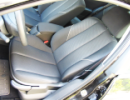
When you buy a car, it is nice to have a clean interior, without spots in the upholstery and broken parts. However, these defects are easily solved with a little soap and water and some small repairs. It will become more of a problem, if the upholstery is ripped.
© Copyright 2002-2011 Keek IT&B 